
Introduction
A small growth on the neck or face may look like a skin tag, but appearance alone does not always distinguish a skin tag from a wart, mole or another lesion. At Millennium Clinic Kuala Lumpur, assessing the growth before removal helps determine whether observation, a simple procedure or further investigation is appropriate. The aim is to identify what the lesion is before choosing how to treat it.
Understanding skin tags vs warts and moles can help you describe your concern, but it should not become a home diagnosis checklist. Different lesions can share a colour, shape or raised surface. A longstanding soft growth and a newly changing pigmented spot deserve different conversations. This guide explains the common differences, important uncertainties and questions to ask when considering skin lesion removal in Kuala Lumpur.
Key Takeaways
| Key Point | Summary |
|---|---|
| Skin tag | A usually benign soft growth, sometimes attached by a narrow stalk. |
| Wart | A viral skin growth that can have a rough surface, although some types look different. |
| Mole | A growth involving pigment-producing cells; moles can be flat or raised. |
| Can a photo confirm the diagnosis? | Not reliably in every case. Examination and sometimes tissue testing are needed. |
| What needs review? | Change, unexplained bleeding, ulceration, rapid growth or uncertain identity. |
| Should I use a home remover? | Do not destroy an unidentified lesion or use wart products on a suspected skin tag. |
What a Skin Tag Usually Looks Like
Skin tags, also called acrochordons, are commonly soft and may project from a small base or stalk. They can blend with the surrounding skin or look darker. Friction from clothing, jewellery or shaving may make one uncomfortable. A lesion that catches on a collar can be bothersome even when it is benign. Removal is therefore sometimes considered for comfort as well as appearance.
The American Academy of Dermatology describes skin tags as generally harmless growths that commonly occur in areas such as the neck, eyelids and underarms. That description does not mean every growth in those areas is a skin tag. Location supplies context, but a clinician also looks at texture, attachment, history and any unusual features before confirming the diagnosis.
How Warts Differ
Warts are associated with human papillomavirus infection of the skin. Many common warts feel firmer and have a rougher surface than skin tags, but not every wart follows that pattern. Flat warts can be subtle, while slender or filiform warts may project from the face and resemble a tag. The AAD’s overview of warts explains their viral origin and variation in presentation.
The distinction affects treatment and prevention advice. A skin tag is not normally managed as a contagious viral lesion, whereas a wart may require advice about spread, picking and shared items. An over-the-counter wart product is designed for particular wart locations and can damage other skin. Do not apply it to a facial growth simply because the surface seems slightly rough.
Why Moles Can Be Confusing
Moles involve melanocytes, the cells that produce pigment. Some are flat, some are raised, and certain raised moles may be soft or have a hair growing through them. They do not all look like a small dark dot. The AAD’s information on moles is useful for understanding that variety, but evaluating a changing lesion still requires professional judgement.
A flesh-coloured raised mole may be mistaken for a skin tag. Conversely, a pigmented skin tag may be mistaken for a mole. Colour alone is therefore a weak guide. If a lesion has changed or has never been examined, do not choose a destructive treatment before discussing the possibility that tissue should be preserved for microscopic examination. The desire for a smoother surface must not obscure the diagnostic question.

A Comparison That Supports, Rather Than Replaces, Assessment
| Feature | Skin tag | Wart | Mole |
|---|---|---|---|
| Typical feel | Soft | Often firm or rough | Variable |
| Attachment | May have a stalk | Often broad-based; some are finger-like | May be flat or raised |
| Underlying process | Benign fibrous skin growth | Viral growth | Melanocytic growth |
| Common concern | Catching, rubbing or appearance | Spread, persistence or discomfort | Change, appearance or diagnostic uncertainty |
| Main caution | Look-alike lesions must be excluded | Location affects treatment safety | Suspicious changes may need biopsy |
These patterns overlap. A growth should not be classified by counting how many boxes it fits. The table helps you understand why a doctor may ask more questions or recommend a different treatment than you expected. If the diagnosis remains uncertain, uncertainty itself is a reason to investigate rather than proceed automatically with cosmetic removal.
Other Lesions That May Resemble a Tag
Seborrhoeic keratoses, papillomas and other benign growths can resemble the three categories above. Some lesions have a waxy surface, while others resemble a tiny bump with a broad attachment. The eye area has its own range of common lesions. Patients do not need to learn every medical name, but they should understand that a small growth has more than three possible explanations.
Rarely, a lesion that seems ordinary may require assessment for a precancerous or malignant process. This does not mean that most skin tags are dangerous or that every tag needs a biopsy. It means that the diagnosis must be credible before the lesion is destroyed. A doctor may reassure you after examination or recommend sampling if the appearance and history do not fit a straightforward benign growth.
Changes That Should Be Discussed Promptly
Bring attention to a lesion that enlarges quickly, bleeds without an obvious injury, develops a persistent sore, changes colour unevenly or becomes increasingly painful. New loss of eyelashes or distortion of an eyelid margin also warrants assessment. Irritation from shaving can cause bleeding, but that explanation should be checked if bleeding is recurrent or the growth is changing.
The NHS advises medical review for a suspected skin tag that grows, hurts or bleeds. In Malaysia, contact a doctor or an appropriate specialist rather than relying on the UK service arrangements described on that page. If bleeding is heavy and will not stop with appropriate pressure, or there is an acute eye problem, seek urgent care rather than waiting for a routine cosmetic appointment.
What the Doctor Needs to Know
Useful details include when the growth first appeared, whether it has changed, whether it catches on clothes and whether you have tried to remove it. Mention any acid, freezing product, thread or sharp instrument used at home. Such treatments can alter the appearance and cause inflammation, making the original lesion harder to assess. Bring a photograph taken before the attempted treatment if available.
Also discuss skin cancer history, immune suppression, diabetes, healing problems, allergies and medicines that affect bleeding. A family history of particular skin conditions may be relevant. Do not stop anticoagulants independently for a removal appointment. The clinician needs to balance the reason for the medication against the procedure’s bleeding risk, and that decision may involve the prescribing doctor.
Professional Skin Assessment in Kuala Lumpur
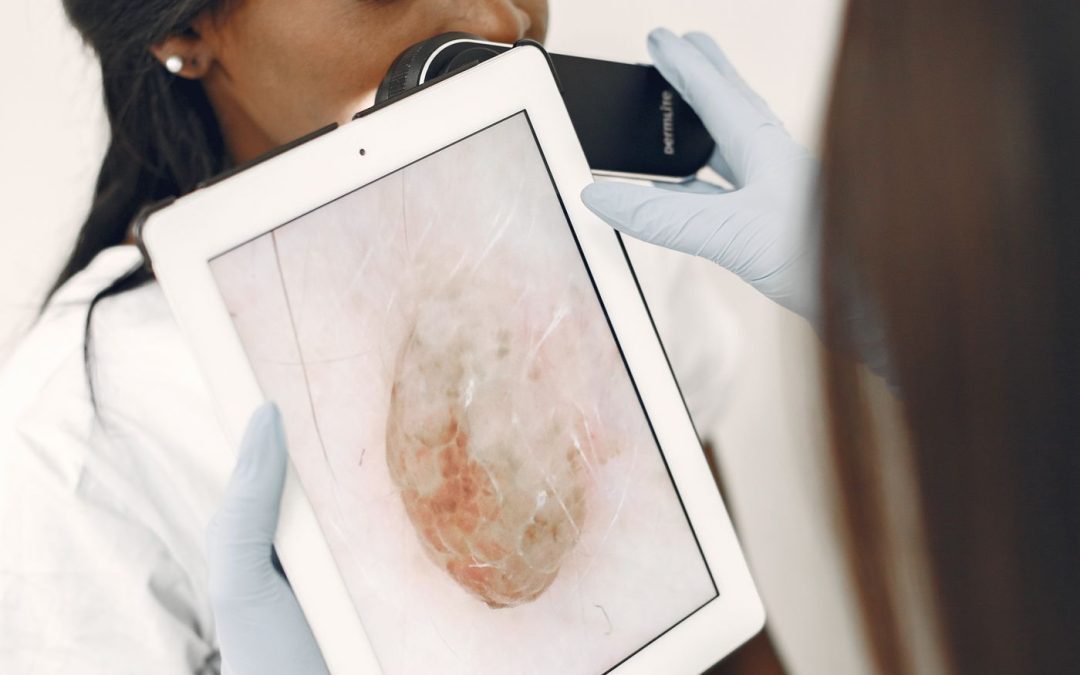
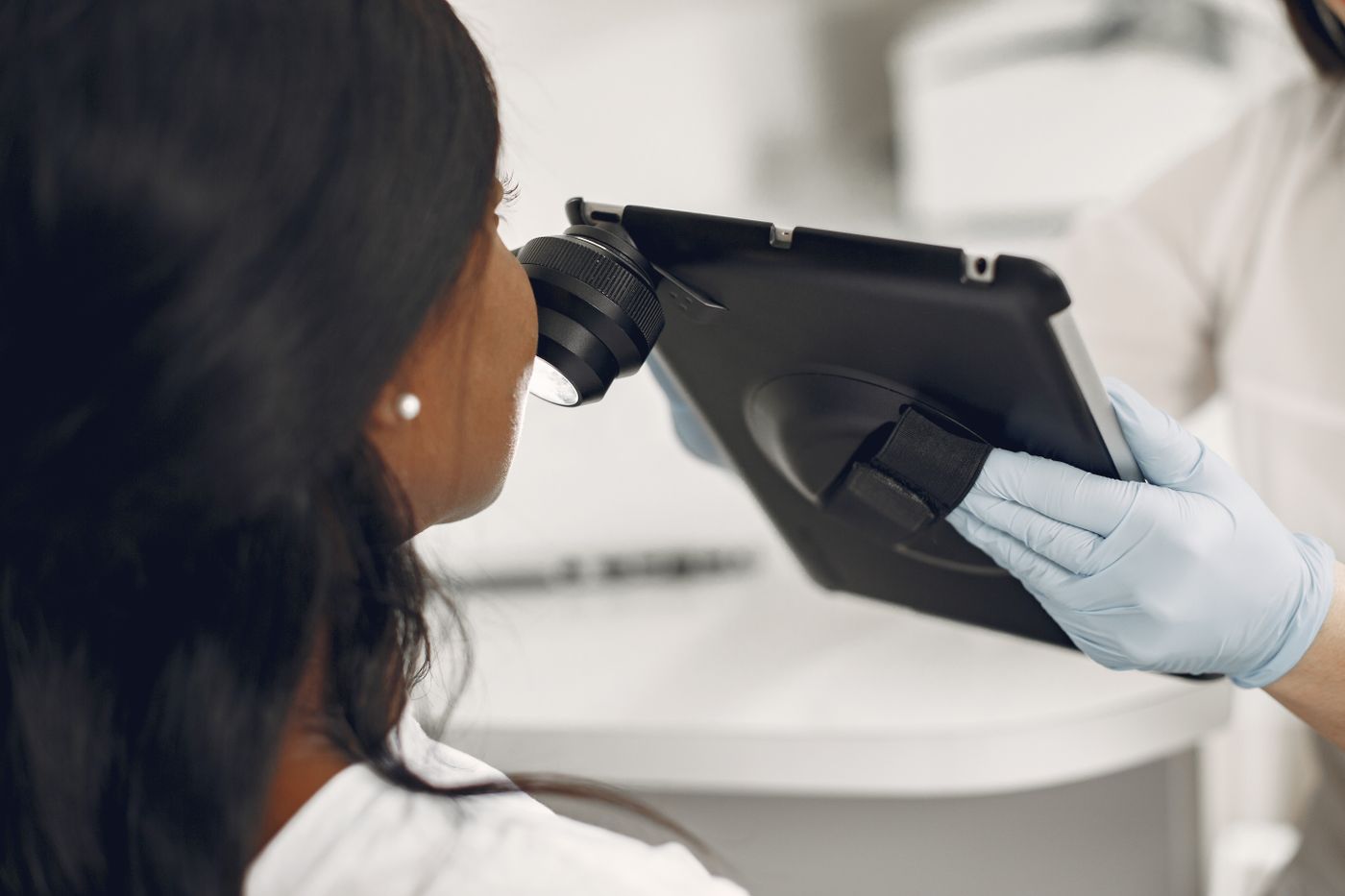
Examination usually involves looking at the lesion and its surroundings, assessing its surface and attachment, and reviewing the history. A dermatoscope may help inspect structures that are difficult to see with the naked eye. If a lesion is on a sensitive site, the clinician should evaluate its relationship to nearby structures and decide whether referral is needed.
An online photograph can help arrange the right appointment, but it may hide scale, firmness, colour variation or features seen only with magnification. Lighting and phone processing can also change the appearance. A reassuring message based on a photograph is not equivalent to a complete examination. Ask whether an in-person assessment is needed before a definite removal plan is offered.
When Tissue Examination Is Appropriate
A biopsy removes or samples tissue so that a laboratory can examine it. The decision depends on diagnostic uncertainty, suspicious features and the clinical situation. A clearly typical skin tag may not need this step, while an unusual lesion may. If tissue testing is recommended, ask what question it will answer and how you will receive the result.
Destroying a lesion with heat, freezing or laser can limit the tissue available for diagnosis. That is why method selection sometimes follows, rather than precedes, the assessment. A patient who requests the fastest cosmetic option may instead be advised to have a small excision. The reason may be to preserve diagnostic information, not to make an otherwise simple appointment unnecessarily complicated.
Treatment Choices Depend on Identity
Confirmed skin tags may be removed using selected medical techniques such as snip removal, an electrical method or freezing. Warts may need a different approach and sometimes several treatment attempts. A mole may be observed, removed for an appropriate reason or biopsied when needed. None of these decisions should be based solely on the fact that the lesion is raised.
Millennium Clinic’s Skin Tag Treatment page describes its service, including electrical and laser approaches. The suitable method is determined during assessment; a service page does not establish that every lesion is eligible for every listed procedure. If the doctor recommends observation, ask why. Leaving a confirmed benign, symptom-free lesion alone is a valid medical option.
Potential Benefits of Getting the Diagnosis Right
An accurate diagnosis can avoid ineffective treatment, unnecessary injury and repeated appointments for the wrong problem. It can also ensure that a lesion needing laboratory examination is not discarded. For a confirmed skin tag, the benefit may be relief from rubbing or easier shaving. For a wart, the treatment goal and follow-up may include persistence or recurrence of a viral growth.
Patients sometimes feel embarrassed about seeking help for a small lesion. A clear explanation can relieve that concern without dismissing it. The size of a growth does not determine how much it affects your daily life. What matters is selecting a proportionate response that addresses discomfort or uncertainty while acknowledging the possibility of a small scar or pigment change after removal.
Risks and Limits of Removal
Removing a benign growth can still cause bleeding, infection, tenderness, scarring or a darker or lighter mark. The risk depends on the site, method, depth of injury and your healing tendency. Brown and darker skin tones may be more prone to visible post-inflammatory pigmentation. A doctor should discuss the likely trade-off between the growth and the mark that treatment could leave.
The FDA warns about harmful unproven products sold for skin lesion removal. Its statements concern US regulation, but the practical concern is relevant to patients buying removers online: an unidentified lesion and a caustic product are a poor combination. “Natural” ingredients do not guarantee gentleness, and a product advertised for both moles and tags does not establish diagnostic safety.
Preparing and Recovering Sensibly
Avoid picking or irritating the lesion before assessment, and arrive with the area accessible for examination. If makeup covers a facial growth, expect it to be removed. Ask whether treatment is likely to occur on the same day and whether you need time away from particular activities. These arrangements vary according to the lesion and planned procedure.
After removal, follow the specific wound instructions rather than applying acids, scrubs or home scar remedies immediately. Keep the follow-up plan and any pathology arrangement clear. Increasing pain, spreading redness, pus or persistent bleeding should prompt contact with the clinic. Once the skin has closed, sun protection may help reduce unnecessary darkening, but it cannot guarantee that no mark will remain.
Frequently Asked Questions
Does a stalk prove that a growth is a skin tag?
No. A stalk supports the possibility, but other lesions can project from the skin. The doctor should consider the whole appearance and history.
Can skin tags be dark?
Yes, they may be darker than nearby skin. A newly changing or unevenly coloured growth should still be assessed rather than assumed to be a harmless tag.
Are all rough growths warts?
No. Roughness occurs in several conditions, including some benign and concerning lesions. It is a descriptive feature rather than a complete diagnosis.
Can a raised mole be harmless?
Many raised moles are benign. What matters is whether it is typical for you, stable and clinically reassuring, or shows features requiring further investigation.
Is a skin tag contagious?
A confirmed ordinary skin tag is not treated as a contagious wart. If the identity is uncertain, ask for examination before assuming either explanation.
Can I cut off a tiny growth myself?
Self-removal risks bleeding, infection and missed diagnosis. Small size does not make an unidentified growth appropriate for home cutting.
Will every lesion need a biopsy?
No. Many can be diagnosed clinically. Tissue testing is considered when the appearance, symptoms or history leave an important question unresolved.
Does bleeding always indicate cancer?
No, friction and injury can cause bleeding. Recurrent or unexplained bleeding needs review, particularly if the growth is also changing or ulcerated.
Can laser remove any mole or skin tag?
Not every lesion is suitable for destruction. A lesion needing histology may be better sampled or excised, and sensitive locations require particular caution.
What should I do with a changing eyelid growth?
Arrange medical assessment and describe the change. Visual symptoms, eye pain or major swelling require more urgent evaluation than a routine removal booking.
Conclusion
Skin tags, warts and moles can overlap in appearance, so identifying the lesion is the first useful step. Knowing common patterns helps you communicate with a clinician, but uncertainty, change or persistent symptoms should lead to assessment rather than stronger home treatment. The best removal method depends on what is being removed and whether tissue examination is needed.
Millennium Clinic Kuala Lumpur provides doctor-led skin assessment and personalised advice about treatment or referral. A consultation can clarify the nature of the growth, the reason for removal and the expected healing trade-offs before you decide on a procedure.
Featured image credit: Gustavo Fring via Pexels. General stock illustration.