
Introduction
Laser hair removal sessions are spaced because follicles move through different growth phases and are not equally responsive on the same day. At Millennium Clinic Kuala Lumpur, the discussion of laser hair removal treatment intervals starts with the patient’s anatomy, medical background and intended outcome, so the treatment name does not substitute for diagnosis.
The most useful interval depends on the treatment area, the speed of meaningful regrowth and the clinician’s review. Booking too frequently cannot force resting follicles to respond. Even when laser hair removal treatment intervals is suitable, severity, healing and biological response differ, which prevents a guaranteed outcome.
Key Takeaways
| Key Point | Summary |
|---|---|
| Why are several sessions needed? | Only a proportion of hairs are in a favourable growth phase at one time. |
| Are all intervals identical? | No. Facial and body areas grow at different rates. |
| Is a missed appointment harmful? | It may lengthen the course but does not automatically erase earlier benefit. |
| Should I wax between sessions? | Usually no, because the follicular target needs to remain. |
| When is maintenance appropriate? | When meaningful coarse regrowth returns after the main course. |

Understanding the Hair-Growth Cycle
Anagen
During active growth, the hair is connected to structures that the treatment aims to impair. A pigmented shaft provides a target for energy.
Catagen
The follicle transitions away from active growth. Its relationship with the shaft changes, reducing predictability.
Telogen
The follicle rests before a new hair develops. Treating repeatedly during rest does not create the same opportunity as waiting for visible active growth.
How Laser Hair Removal Works
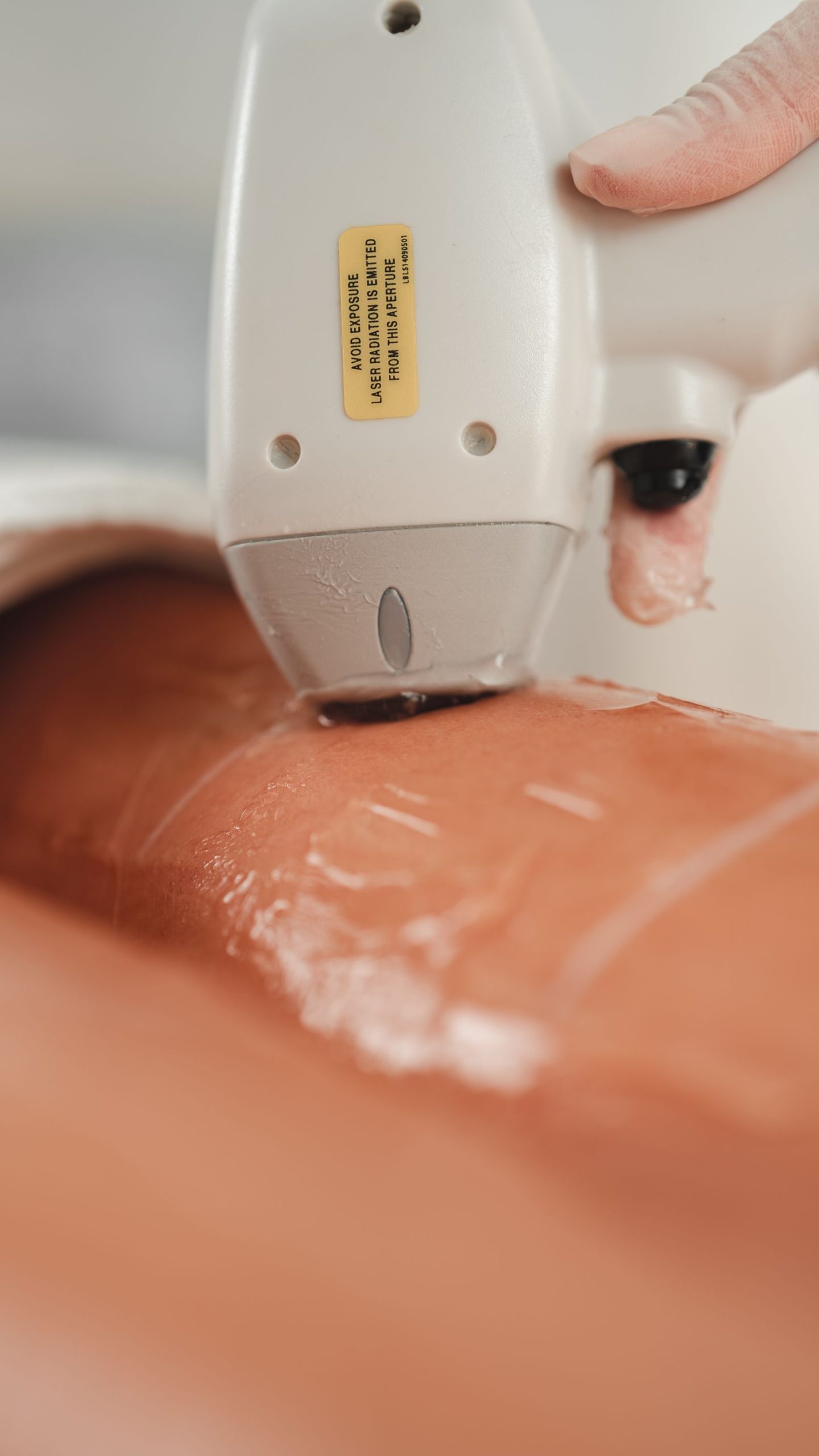
Laser hair removal uses light absorbed by melanin in the hair shaft and follicle; The absorbed energy becomes heat and can impair the follicle’s ability to produce another coarse hair; It is more accurate to describe the outcome as long-term hair reduction rather than guaranteed permanent removal because follicles can recover and new hormonally influenced hair can develop; For laser hair removal treatment intervals, this mechanism must be interpreted alongside the article-specific issue: The most useful interval depends on the treatment area, the speed of meaningful regrowth and the clinician’s review. Booking too frequently cannot force resting follicles to respond.
Mayo Clinic explains that skin colour, hair colour and the treatment plan influence both results and risk; Dark hair generally responds better because it contains more target pigment, while white, grey, very light blonde and some red hair may respond poorly; Most patients require a series because follicles are not all in the same growth phase at one time; That evidence is relevant to why body area changes the schedule, but it does not predict an individual patient’s response.
People with brown or black skin can undergo treatment, but epidermal melanin competes for light energy; A systematic review of laser and light hair reduction in skin types III to VI found broadly similar outcomes among several modalities while highlighting differences in adverse-event profiles; Device selection, wavelength, cooling, pulse duration and operator experience all matter; a brand name alone does not establish safety; The practical meaning for laser hair removal treatment intervals is therefore narrower than a general marketing claim about the treatment.
The American Academy of Dermatology warns that inexperienced laser treatment can cause burns, blisters, infection or dark marks; Patients should disclose tanning, previous reactions, medicines and conditions that affect hair growth before treatment; This point supports a diagnosis-led plan for laser hair removal treatment intervals, not a standard package for every patient.
Why Body Area Changes the Schedule
Facial hair often cycles and becomes visible differently from leg, back, bikini or underarm hair. Hormonal sensitivity is also greater in some facial regions. A clinic should not use a single automatic interval for every body area.
Early appointments are often planned several weeks apart, but the interval may lengthen as regrowth slows. The correct time is not simply when the skin has stopped being red; biological regrowth must also be present.
Patients should distinguish shedding from regrowth. Treated hairs can remain in the follicle and be expelled over days or weeks, creating the impression that they are still growing.
Who May Benefit?
An interval-based plan benefits patients who can attend reviews and avoid methods that remove the follicular target.
- Patients completing an initial series
- People treating multiple body areas
- Patients with changing regrowth patterns
- Those willing to photograph or document progress
- Patients who can follow shaving guidance
Who May Need a Different Approach?
Very frequent treatment without meaningful regrowth is unlikely to improve efficiency. Patients with new hormonal symptoms, unexpected stimulation or repeated skin reactions need reassessment rather than another routine appointment.
Professional Assessment in Kuala Lumpur
A useful consultation turns the search term “laser hair removal treatment intervals” into a clinical question: what is the target, how can it be measured and what alternative explanation must be excluded? The clinician should record the feature described under understanding the hair-growth cycle before discussing a course of Laser Hair Removal.
When scheduling laser hair removal treatment intervals, current health, prescribed and non-prescribed medicines, earlier procedures and upcoming events all matter; Kuala Lumpur’s humid climate can make sweat and sun avoidance harder, so instructions should be workable rather than generic.
Treatment Process
Before treatment
Note the date of the last session, shedding pattern, time until regrowth and any skin reaction. Do not conceal recent tanning or medicine changes.
During treatment
Only areas with an appropriate target and recovered skin should be treated. Parameters may be adjusted after observing previous tolerance and reduction.
After treatment
Allow treated hairs to shed. Avoid plucking to “test” whether treatment worked, and record when coarse regrowth becomes evident.
Expected Treatment Course
| Period | Decision |
|---|---|
| Days after treatment | Manage transient redness; do not judge final reduction |
| Following weeks | Treated hair may shed |
| When meaningful regrowth appears | Assess whether the next session is timely |
| Later in the course | Intervals may lengthen as growth becomes sparser |
| After the main course | Maintenance only for meaningful recurrence |
No package can determine the correct schedule for laser hair removal treatment intervals in advance; Review after the relevant biological response is more important than completing a prepaid number of visits.
Potential Benefits
- Better alignment with responsive growth phases
- Fewer unnecessary appointments
- Clearer progress assessment
- Potentially lower cumulative irritation
- More realistic planning around body-area differences
The list is a set of potential gains, not a guarantee for laser hair removal treatment intervals; A fair review uses the original baseline, a consistent setting and enough time for the relevant response.
Limitations and Realistic Expectations
Growth cycles vary between individuals, so online calendars are only approximate. Hormones, age, medicines, pregnancy and the area treated can alter the pattern. A delay may slow progress, but treating prematurely can waste time and cost.
Comparison with Other Options
| Timing approach | Advantage | Problem |
|---|---|---|
| Fixed short intervals | Easy to book | May treat before enough target hair returns |
| Area-based intervals | Reflects typical regional differences | Still requires individual adjustment |
| Regrowth-guided review | Uses the patient’s actual response | Requires monitoring and flexible booking |
| Automatic maintenance | Convenient for packages | May continue when there is little worthwhile target |
Combination-Treatment Considerations
When more than one body area is treated, appointments can be coordinated without forcing identical intervals. Hormonal evaluation should run in parallel when growth is unexpectedly persistent.
Combination planning for laser hair removal treatment intervals should specify sequence, interval and the outcome assigned to each treatment; Separating procedures can protect recovery time and improve interpretation of the result.
Safety Considerations
Expected short-term effects include perifollicular redness, mild swelling, warmth or temporary tenderness; Less common complications include blistering, crusting, prolonged hyperpigmentation, hypopigmentation, scarring, infection and paradoxical stimulation of nearby hair; Eye protection is essential, and treatment should not be performed over the eyelids or directly around the eyes; In this article’s context, the clinician must also consider: Repeated exposure before irritation has resolved may increase cumulative inflammation. New blistering, pigment change or paradoxical growth should trigger review.
Pregnancy, active infection, significant dermatitis, recent tanning, photosensitising medicine and a history of poor healing may lead to postponement or modification; Patients should never stop prescribed medicine simply to attend a cosmetic appointment; the prescribing clinician and treating doctor should advise; Risk discussion for laser hair removal treatment intervals should be tailored to the anatomical area and the patient’s history.
Repeated exposure before irritation has resolved may increase cumulative inflammation. New blistering, pigment change or paradoxical growth should trigger review.
Recovery and Aftercare
- Use cool compresses if advised for temporary warmth or swelling. Apply this advice to the planned laser hair removal treatment intervals protocol.
- Avoid scratching, harsh exfoliation and fragranced products until irritation settles. Confirm the exact timing for laser hair removal treatment intervals with the treating clinician.
- Use broad-spectrum sunscreen and minimise deliberate tanning. Report any unexpected change during the laser hair removal treatment intervals course.
- Do not wax, pluck or thread hairs between sessions unless the clinic specifically advises otherwise. Individual instructions for laser hair removal treatment intervals may be more specific.
- Contact the clinic for blistering, increasing pain, spreading redness or persistent pigment change. Keep this point in the written aftercare plan for laser hair removal treatment intervals.
Photographing a small consistent area before shaving can help document density without allowing hair to become unnecessarily long.
When and How Results Should Be Assessed
The fair review date depends on mechanism; Some effects emerge as inflammation settles; others require hair cycles, muscle relaxation or collagen remodelling; Keep camera angle, lighting and distance stable, and avoid changing several treatments before the first result can be interpreted; For laser hair removal treatment intervals, comparison should focus on the specific outcome described in this article.
Document the endpoint relevant to laser hair removal treatment intervals, together with comfort, downtime and any unwanted change; If the result is unclear, observation may be safer than immediate escalation; The purpose of follow-up is to decide whether to continue, modify or stop—not to confirm that every session worked; The review should also record the article-specific limitation: Growth cycles vary between individuals, so online calendars are only approximate. Hormones, age, medicines, pregnancy and the area treated can alter the pattern. A delay may slow progress, but treating prematurely can waste time and cost.
Questions to Ask Before Treatment
- What growth phase is being targeted?
- Why is this interval recommended for this body area?
- Should the interval lengthen later?
- How do I distinguish shedding from regrowth?
- What should I do if I miss a session?
- When will maintenance stop being worthwhile?
Maintenance and Long-Term Planning
Maintenance should be response-led. Sparse fine regrowth may not justify treatment, particularly when there is insufficient pigment to target safely.
Questions That Improve Treatment Decisions
Patients considering “laser hair removal treatment intervals” should ask three linked questions: what is causing the concern, what can Laser Hair Removal realistically alter, and what trade-offs are acceptable? A consultation is most useful when it answers all three rather than beginning with a sales package; For laser hair removal treatment intervals, the decision should remain tied to understanding the hair-growth cycle.
What is the target?
The target might be a hair follicle, a muscle, a layer of skin, localised laxity or loss of structural support; Different targets can produce a similar complaint, so a treatment that suits one patient may not suit another; The clinician should explain the relevant anatomy and any factor that could reduce response; The most relevant endpoint here is the one defined under why body area changes the schedule.
How will benefit be recognised?
Choose comparable photographs, measurements or symptom records before treatment; Agree on the earliest fair review date and avoid judging a gradual treatment during the temporary inflammatory phase; The plan should include a realistic ceiling: improvement does not mean perfect symmetry, permanent prevention of ageing or complete elimination of every visible feature; This keeps the plan centred on laser hair removal treatment intervals instead of a generic treatment package.
What would change the plan?
New medicine, pregnancy, active inflammation, recent procedures, unexpected pain or a stronger-than-expected reaction can alter timing; A poor response should trigger diagnostic review rather than automatic escalation; The exact product or device, practitioner qualifications, aftercare access and emergency arrangements should be clear before consent; A review of laser hair removal treatment intervals should revisit the original concern described in this article before another session is booked.
A second opinion can be reasonable when the diagnosis is uncertain, the proposed course is unusually intensive or expectations between patient and clinician do not match; Taking time to decide is not treatment failure; Elective care should allow informed comparison without pressure to commit on the consultation day; For laser hair removal treatment intervals, the decision should remain tied to understanding the hair-growth cycle.
- Which finding makes this treatment suitable for me? Apply this advice to the planned laser hair removal treatment intervals protocol.
- Which result is likely and which is unlikely? Confirm the exact timing for laser hair removal treatment intervals with the treating clinician.
- How many visits form a reasonable trial? Report any unexpected change during the laser hair removal treatment intervals course.
- What side effects require same-day contact? Individual instructions for laser hair removal treatment intervals may be more specific.
- What is the stopping rule if improvement is minimal? Keep this point in the written aftercare plan for laser hair removal treatment intervals.
Pause Points and Warning Signs
Treatment should pause when the area is inflamed, infected, injured or not fully recovered; A new health condition, medicine or recent procedure may change risk even if earlier sessions were uneventful; Increasing pain, blisters, unusual colour change, progressive weakness, discharge or delayed healing requires assessment rather than waiting for the next routine appointment; Timing for laser hair removal treatment intervals should account for the recovery and biological response described above.
Practical Scheduling in Kuala Lumpur
Recovery must be compatible with the patient’s real routine; Humidity, sweating, commuting, outdoor exposure and difficulty avoiding sun should be discussed; Do not schedule Laser Hair Removal immediately before a major event simply because the usual downtime is described as short; individual reactions are not perfectly predictable; This is especially relevant when the patient’s goal concerns understanding the hair-growth cycle.
Related Treatment Information
For wider context around laser hair removal treatment intervals, patients can read Millennium Clinic’s Laser Hair Removal in Kuala Lumpur and A patient guide to longer-term laser hair reduction. The linked pages cover the broader treatment category, while this article retains ownership of the narrower question about why body area changes the schedule.
Frequently Asked Questions
Why can’t I have laser every week?
Most follicles will not become newly responsive within such a short time.
Are facial sessions closer together?
They may be, but the actual interval depends on regrowth and the clinic’s protocol.
What if I miss an appointment?
The course may take longer, but previous follicular damage is not automatically reversed.
Can I wax while waiting?
Usually not, because waxing removes the target.
Why does hair look like it is growing after treatment?
Treated hairs may be shedding from the follicle.
Will intervals become longer?
Often, as regrowth becomes slower and sparser.
Do all body areas need the same number of sessions?
No. Hair biology and response differ.
Can I treat before a holiday?
Consider sun exposure and allow time for irritation to settle.
When does maintenance start?
After the main course, when meaningful coarse regrowth returns.
Does a short interval make results faster?
Not necessarily. Timing must align with biology.
Conclusion
Laser hair removal treatment intervals should follow hair biology, body area and observed regrowth. A flexible, review-based course is more rational than repeating treatment on an arbitrary short calendar.
Patients seeking advice about laser hair removal treatment intervals can consult Millennium Clinic Kuala Lumpur for a doctor-led assessment and a personalised plan that includes alternatives and follow-up.


0 Comments