
Introduction
Jawline Botox and masseter Botox are often used interchangeably online, but they may target different muscles and different causes of lower-face shape. At Millennium Clinic Kuala Lumpur, the discussion of jawline Botox vs masseter Botox starts with the patient’s anatomy, medical background and intended outcome, so the treatment name does not substitute for diagnosis.
Masseter treatment targets a deep chewing muscle near the jaw angle. Jawline treatment may refer to selected platysma or lower-face muscles. Neither can remove fat, reshape bone or replace a surgical lift. No fixed outcome should be promised for jawline Botox vs masseter Botox; the patient’s starting point, treatment parameters and response all influence the result.
Key Takeaways
| Key Point | Summary |
|---|---|
| Are they the same? | No. The target muscle and objective may differ. |
| What does masseter Botox do? | It may reduce muscle activity and gradually reduce prominence. |
| What may jawline Botox mean? | Often treatment of selected downward-pulling lower-face or platysma fibres. |
| Can either remove fat? | No. |
| Are these uses always approved? | Cosmetic lower-face uses may be off-label depending on product and jurisdiction. |

The Muscles Behind the Two Terms
Masseter
The masseter is a powerful chewing muscle extending from the cheekbone region to the lower jaw. Enlargement can contribute to a square lower face, but bone width and fat also matter.
Platysma and lower-face depressors
The platysma is a broad superficial neck muscle with fibres extending into the lower face. Selected activity may pull the jawline or mouth region downward. Other small muscles influence the lower lip and smile, creating a narrower margin for error.
How Botox Works
Botox is a brand of botulinum toxin type A; The medicine temporarily reduces acetylcholine release at selected nerve endings; In facial treatment this reduces activity in targeted muscles; in hyperhidrosis treatment it reduces signalling to selected sweat glands; Products have different formulations and units, so doses are not directly interchangeable; For jawline Botox vs masseter Botox, this mechanism must be interpreted alongside the article-specific issue: Masseter treatment targets a deep chewing muscle near the jaw angle. Jawline treatment may refer to selected platysma or lower-face muscles. Neither can remove fat, reshape bone or replace a surgical lift.
Mayo Clinic explains that botulinum toxin injections temporarily prevent selected muscles from moving and are also used for medical concerns including excessive sweating; The intended effect depends on which structure is treated rather than the brand name alone; That evidence is relevant to different goals and different timelines, but it does not predict an individual patient’s response.
The FDA prescribing information for onabotulinumtoxinA includes approved cosmetic and medical indications, warnings and area-specific dosing information; Jawline shaping and masseter slimming may be off-label depending on the product and local registration; informed consent should distinguish approved and off-label use; The practical meaning for jawline Botox vs masseter Botox is therefore narrower than a general marketing claim about the treatment.
A Cochrane review of botulinum toxin type A for facial wrinkles included studies across the glabella, crow’s-feet and other facial regions; Evidence supports temporary improvement, but results and adverse events differ by product, dose, anatomy and study design; This point supports a diagnosis-led plan for jawline Botox vs masseter Botox, not a standard package for every patient.
Different Goals and Different Timelines
Masseter treatment may be used for cosmetic muscle prominence or selected muscle-related clenching symptoms after appropriate evaluation. Reduction in muscle force can precede visible contour change because the muscle bulk changes gradually.
Jawline treatment aims for subtle balance by reducing selected downward pull. It cannot tighten loose skin substantially or create structural chin support.
For pain or bruxism, dental and jaw-joint causes should be considered. Botulinum toxin does not correct tooth alignment, joint disease or every source of facial pain.
Who May Benefit?
The correct candidate has a confirmed muscle-related component rather than a concern caused mainly by bone, fat or skin.
- Adults with prominent masseter contraction
- Selected patients with lower-face depressor activity
- People accepting gradual and temporary results
- Patients with realistic functional expectations
- Those without relevant neuromuscular contraindications
Who May Need a Different Approach?
Marked skin laxity, submental fat, limited chin projection or broad jaw bone will not be corrected by weakening a muscle. Swallowing problems, neuromuscular disease and pregnancy require specific caution.
Professional Assessment in Kuala Lumpur
For jawline Botox vs masseter Botox, assessment should begin with the outcome the patient would value and the reason that outcome may be achievable; The clinician should test that assumption against anatomy, examination and the evidence discussed in this article, then state what Botox is unlikely to change.
A safe jawline Botox vs masseter Botox plan includes previous reactions, important health conditions, medicines, recent treatment and lifestyle constraints; Malaysian skin tones and climate deserve practical attention because pigment change, sun exposure and sweating may influence risk reduction and appointment timing.
Treatment Process
Before treatment
The patient should clench, smile, speak and activate the neck while muscle boundaries and baseline asymmetry are assessed. Jaw pain may justify dental review.
During treatment
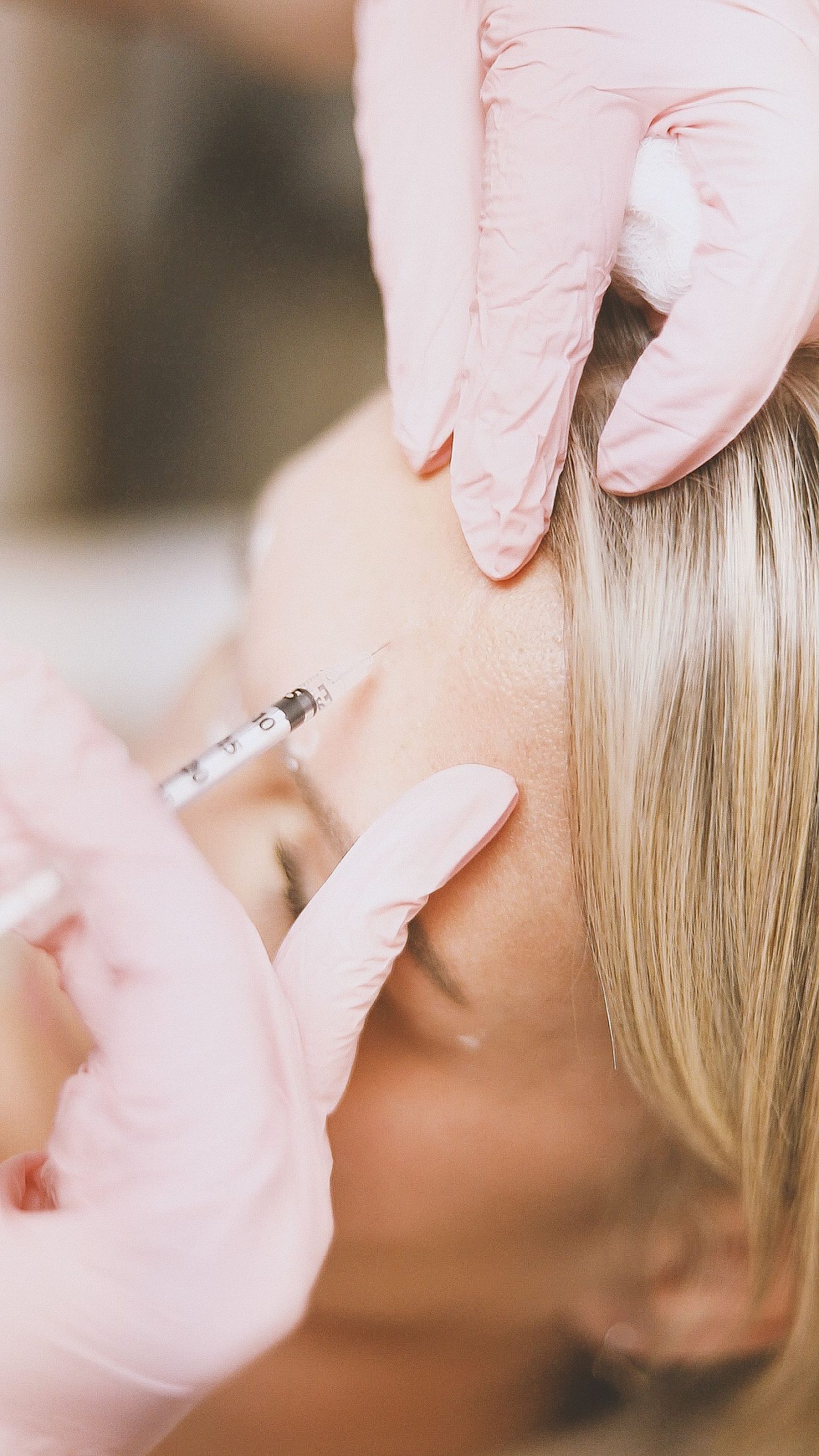
Injection depth differs because the masseter is deeper than superficial platysma fibres. Dose is customised to muscle thickness, function, asymmetry and product.
After treatment
Masseter chewing fatigue or lower-face asymmetry can occur. The result should be reviewed after the effect has settled, with contour change assessed later than early movement change.
Expected Treatment Course
| Feature | Jawline treatment | Masseter treatment |
|---|---|---|
| Target | Selected superficial lower-face or platysma activity | Deep chewing muscle |
| Early change | Reduced downward pull | Reduced contraction or tension |
| Visible contour | Usually subtle | May develop gradually as bulk changes |
| Main limitation | Cannot tighten major laxity | Cannot narrow bone or remove fat |
Treat the schedule as a starting point for jawline Botox vs masseter Botox; Individual healing, response and changing goals may justify fewer visits, longer intervals or a different treatment altogether.
Potential Benefits
- More precise understanding of the target muscle
- Potential subtle lower-face refinement
- Possible gradual reduction in masseter prominence
- Short procedure
- Temporary, reviewable effect
Potential does not equal certainty; The clinical question is whether jawline Botox vs masseter Botox produces a worthwhile change for this patient after transient treatment effects are no longer influencing the comparison.
Limitations and Realistic Expectations
Lower-face injections can affect speech, chewing, swallowing or smile symmetry if toxin reaches unintended muscles. The treatment is not a facelift or fat-reduction procedure.
Comparison with Other Options
| Cause of concern | More relevant assessment | Why |
|---|---|---|
| Large masseter | Masseter Botox | Targets muscle bulk and force |
| Downward platysmal pull | Selected jawline/platysma treatment | Targets superficial depressor activity |
| Loose skin | Energy-based or surgical assessment | Not primarily a muscle problem |
| Submental fat | Fat-directed assessment | Toxin does not remove fat |
| Weak chin projection | Structural assessment | Toxin cannot add projection |
Combination-Treatment Considerations
A patient may have more than one contributor, but each treatment should be staged or combined for a defined reason. Treating every lower-face muscle can compromise function.
The reason to combine treatments is complementary targeting, not package size; In the context of jawline Botox vs masseter Botox, the safest sequence depends on anatomy, recovery and which outcome needs to be assessed first.
Safety Considerations
Common effects include injection-site pain, redness, swelling, bruising and headache; Area-specific unwanted effects can include eyebrow or eyelid droop, altered smile, chewing fatigue, asymmetry, dry-eye symptoms or weakness of a nearby muscle; In this article’s context, the clinician must also consider: Lower-face anatomy is unforgiving. Unwanted smile change, chewing weakness, speech change or swallowing difficulty requires clinical review; swallowing or breathing difficulty needs urgent care.
Rarely, toxin effects can spread beyond the intended area; Urgent medical attention is required for difficulty swallowing, speaking or breathing, widespread weakness or significant vision symptoms; Treatment may be unsuitable during pregnancy or breastfeeding, with infection at the injection site, certain neuromuscular disorders or relevant medicine interactions; Risk discussion for jawline Botox vs masseter Botox should be tailored to the anatomical area and the patient’s history.
Lower-face anatomy is unforgiving. Unwanted smile change, chewing weakness, speech change or swallowing difficulty requires clinical review; swallowing or breathing difficulty needs urgent care.
Recovery and Aftercare
- Do not rub or massage injection points unless instructed. Apply this advice to the planned jawline Botox vs masseter Botox protocol.
- Follow the clinic’s advice about exercise, heat, alcohol and skincare. Confirm the exact timing for jawline Botox vs masseter Botox with the treating clinician.
- Allow the effect to develop before requesting additional units. Report any unexpected change during the jawline Botox vs masseter Botox course.
- Attend review with comparable photographs and expressions. Individual instructions for jawline Botox vs masseter Botox may be more specific.
- Seek urgent care for swallowing, breathing, speech or major visual symptoms. Keep this point in the written aftercare plan for jawline Botox vs masseter Botox.
Avoid massaging injection points and allow the full neuromuscular effect to develop before deciding on additional units.
How to Review Progress Objectively
Repeat photographs with the same camera, distance, lighting and position; Compare the specific endpoint agreed before Botox, not a general impression after flattering lighting or temporary swelling; Early redness can exaggerate texture, while swelling can briefly hide depressions or create fullness; For jawline Botox vs masseter Botox, comparison should focus on the specific outcome described in this article.
For jawline Botox vs masseter Botox, meaningful improvement may be partial; The review should record what changed, what remained and whether the difference is valuable enough to justify further treatment; Perfect symmetry, complete removal and permanent prevention of ageing are rarely realistic endpoints; The review should also record the article-specific limitation: Lower-face injections can affect speech, chewing, swallowing or smile symmetry if toxin reaches unintended muscles. The treatment is not a facelift or fat-reduction procedure.
Questions to Ask Before Treatment
- Which exact muscle is being treated?
- Is my jaw width muscular or bony?
- Is the use approved or off-label?
- Could treatment affect chewing or smile?
- When will contour be reviewed?
- What alternatives address fat or laxity?
Maintenance and Long-Term Planning
Repeat treatment should follow renewed muscle activity and reassessment. Excessive repeated weakening may alter facial balance or reveal laxity.
How to Decide Whether This Treatment Fits Your Goal
Begin with the problem, not the procedure; Someone searching for “jawline Botox vs masseter Botox” should first identify the visible change that matters, where it occurs and how it affects daily life; The clinician can then decide whether Botox acts on the relevant tissue; If the proposed mechanism does not match the concern, a familiar treatment name is not a good reason to proceed; For jawline Botox vs masseter Botox, the decision should remain tied to the muscles behind the two terms.
Convert the goal into something observable; Depending on the concern, this may mean fewer coarse hairs, softer movement, improved contour, less obvious texture or a gradual change in facial support; Baseline photographs should be taken before temporary swelling or redness can distort comparison; The plan should also state what treatment is unlikely to change; The most relevant endpoint here is the one defined under different goals and different timelines.
Evidence, device and consent
Ask whether the evidence relates to the exact product, platform, anatomical area and indication being offered; Findings from one device or facial zone cannot always be transferred to another; Approved uses, off-label uses and emerging evidence should be described separately, with alternatives and the option of no treatment; This keeps the plan centred on jawline Botox vs masseter Botox instead of a generic treatment package.
Review and stopping rules
Agree when progress will be reviewed and what would justify pausing; Treatment should not continue automatically when improvement has plateaued, adverse effects are accumulating or the original diagnosis appears incorrect; A responsible plan includes total-course expectations, likely maintenance and a route for urgent review; A review of jawline Botox vs masseter Botox should revisit the original concern described in this article before another session is booked.
- Who will assess and perform the treatment? Apply this advice to the planned jawline Botox vs masseter Botox protocol.
- What exact device or product will be used? Confirm the exact timing for jawline Botox vs masseter Botox with the treating clinician.
- How will progress be photographed or measured? Report any unexpected change during the jawline Botox vs masseter Botox course.
- What downtime and uncommon complications are relevant? Individual instructions for jawline Botox vs masseter Botox may be more specific.
- When would the clinician recommend stopping or changing course? Keep this point in the written aftercare plan for jawline Botox vs masseter Botox.
When to Delay or Reconsider Treatment
Active infection, significant inflammation, sunburn, open wounds or another problem affecting healing should be assessed before proceeding; New medicine, pregnancy, breastfeeding, recent surgery or another aesthetic procedure can also alter timing; Repeating a treatment despite worsening pain, spreading redness, blistering, discharge or impaired function is unsafe; contact the clinic promptly; Timing for jawline Botox vs masseter Botox should account for the recovery and biological response described above.
Planning Around Work and Kuala Lumpur Conditions
Minimal downtime does not mean no visible recovery; Leave a buffer before weddings, important meetings or travel in case bruising, tenderness or swelling lasts longer than average; Kuala Lumpur’s heat, humidity and ultraviolet exposure make sunscreen, sweat management and realistic aftercare especially important; This is especially relevant when the patient’s goal concerns the muscles behind the two terms.
Related Treatment Information
For wider context around jawline Botox vs masseter Botox, patients can read Millennium Clinic’s Botox treatment in Kuala Lumpur and Botox safety standards in Malaysia. The linked pages cover the broader treatment category, while this article retains ownership of the narrower question about different goals and different timelines.
Frequently Asked Questions
Is jawline Botox the same as masseter Botox?
No.
Which one slims a square jaw?
Masseter treatment may help when muscle bulk is the main cause.
Can jawline Botox remove jowls?
It cannot remove jowls or major loose skin.
Can masseter Botox help clenching?
It may help selected muscle-related symptoms, but dental causes need assessment.
When does slimming appear?
More gradually than the initial reduction in muscle activity.
Can chewing feel weak?
Yes, temporarily.
Can my smile change?
Unwanted asymmetry is possible with lower-face injections.
Does Botox change bone?
No.
Can both treatments be done together?
Possibly, but only when both targets are clinically appropriate.
How many units are needed?
There is no universal dose and product units are not interchangeable.
Conclusion
Jawline Botox and masseter Botox should be chosen by anatomy, not by interchangeable marketing language. Identifying the muscle—and confirming that muscle is truly the problem—is the foundation of safe lower-face treatment.
Millennium Clinic Kuala Lumpur offers a doctor-led pathway for jawline Botox vs masseter Botox, from initial assessment and informed consent to individualised treatment planning and review.

0 Comments