


Dr Diana Salim
Aesthetic doctor at Millennium Clinic Kuala Lumpur. Learn about her background and approach to individual assessment on her doctor profile.

TABLE OF CONTENTS
- Introduction
- Key Takeaways
- A Heavy Lower Face Is Not One Diagnosis
- What Focused Ultrasound Can Reasonably Target
- Why Excess Skin Changes the Discussion
- The Neck Can Have Separate Contributors
- What the Ultrasound Evidence Does and Does Not Show
- Why More Energy Is Not the Answer to Every Poor Fit
- Avoid Confusing Heaviness with a Need to Remove Fat
- Questions That Clarify Suitability
- A Useful Comparison of Pathways
- Combination Treatment Needs Independent Reasons
- Safety and Reasons to Delay
- Recovery and Follow-up
- Planning Around Cost, Work and Events
- Normal Ageing and Personal Choice
- FAQs
- Conclusion
- References
Introduction
Heavy jowls and excess neck skin do not always respond adequately to a non-surgical tightening procedure. At Millennium Clinic Kuala Lumpur, a HIFU consultation should identify how much of the concern comes from loose skin, tissue descent, fat distribution or reduced support. A modest tightening effect may not produce the degree of change a patient wants when several structures are involved.
Understanding HIFU for heavy jowls means discussing limitations before choosing treatment, not only after an unsatisfactory result. This article explains what an assessment may find, why more treatment intensity is not a substitute for correct selection, and when observation, another non-surgical option or a surgical opinion may be more appropriate for patients in Kuala Lumpur.
Key Takeaways
| Key Point | Summary |
|---|---|
| What is a jowl? | A lower-face contour change that may involve several tissue layers and contributors. |
| HIFU’s potential role | Selected tightening concerns may be considered after examination. |
| Main limitation | Focused ultrasound does not physically remove substantial excess skin. |
| Heavy tissue | Greater descent or laxity may exceed the change expected from a non-surgical approach. |
| More energy | Increasing treatment intensity does not guarantee a better or safer result. |
| Next step | Match the desired degree of improvement to anatomy, alternatives and acceptable risk. |
A Heavy Lower Face Is Not One Diagnosis
Patients may describe sagging, heaviness, a double chin or loss of jawline definition as if they are the same problem. In practice, the appearance can reflect different combinations of skin looseness, tissue position, local fullness and skeletal support. A doctor needs to examine the lower face and neck rather than selecting treatment from a single photograph.
The concern may also look different with head position and facial movement. Looking down can create folds that are less prominent in a neutral position. That does not mean the concern is imaginary; it means the examination should consider normal movement and the appearance the patient hopes to change in ordinary life.
Tell the clinician whether your priority is a subtle improvement or a much more defined contour. Those are different treatment goals. A person who would be satisfied with a modest change may make a different decision from someone who expects removal of a large amount of loose skin. Honest expectations are central to suitability.
When laxity is part of the concern, our page on assessment of sagging skin explains the broader assessment.
What Focused Ultrasound Can Reasonably Target
HIFU refers to focused ultrasound energy, but aesthetic systems differ in their design, indications and evidence. Treatment creates controlled effects at selected tissue depths. The clinician should explain the particular system being used and the kind of change it is intended to produce. A generic description of collagen stimulation does not establish that every visible contour problem can be corrected.
The AAD discusses non-surgical ultrasound among options for selected skin-tightening concerns. It also distinguishes the degree of improvement available from different approaches. A non-surgical procedure should not be presented as equivalent to an operation that removes or repositions tissue.
Some patients may notice a worthwhile improvement after an appropriate treatment, while others see little change. Neither a popular device name nor a large treatment package can predict the individual result. The consultation should explain the likely ceiling as well as the potential benefit.
Why Excess Skin Changes the Discussion
Skin that is substantially redundant cannot be assessed only as a problem of stimulating more collagen. A procedure that creates thermal effects does not physically excise that extra skin. The greater the amount of laxity or descent, the more important it becomes to discuss whether a non-surgical result can meet the patient’s expectations at all.
The American Society of Plastic Surgeons describes facelift surgery as addressing features including jowls and facial sagging. It states that minimally invasive treatments cannot achieve the same result. This distinction supports an informed comparison rather than an assumption that an injectable or device is a non-surgical version of the same operation.
A surgical opinion is not a commitment to surgery. It can help clarify what an operation might address, its risks and whether it is medically appropriate. A patient may still choose a smaller non-surgical change or no procedure. The value lies in understanding the alternatives, not in steering everyone towards the most intensive option.
Our discussion of HIFU suitability for thin faces explores why volume and tissue thickness need their own assessment.
The Neck Can Have Separate Contributors
Loose neck skin, local fat, muscle-related bands and changes along the jaw may coexist. The main issue may not be the same in the neck as in the cheeks. An assessment should identify each contributor rather than assuming that one treatment across the entire region will produce a uniform lift.
The ASPS explains that neck-lift planning addresses particular lower-face and neck changes. Surgery has its own limitations and risks, but the information helps distinguish tissue-removal or repositioning goals from those of a non-surgical tightening treatment.
If a clinician recommends treating a different contributor, ask how that finding relates to your main complaint. Reducing local fullness, relaxing a muscle or improving surface texture are not interchangeable outcomes. A better-looking skin surface does not necessarily mean that excess neck skin has been removed or that heavy jowls have been repositioned.
What the Ultrasound Evidence Does and Does Not Show
A systematic review of MFU-V reports improvement in selected study populations and limitations in the evidence. The findings concern microfocused ultrasound with visualisation, not every HIFU device. They should not be used to promise a response in a patient with substantial tissue excess who differs from those studied.
Average improvement and satisfaction do not tell an individual how much contour change to expect. Studies may use different scales and definitions of success, and a small visible change may be judged differently by different patients. Ask whether the evidence measures the outcome you want, not simply whether the device has been studied somewhere.
The MFU-V expert consensus emphasises customised assessment and treatment planning. That supports considering tissue characteristics rather than applying one standard pattern to every face. It does not establish that increasing coverage or energy can overcome every anatomical limitation.
Why More Energy Is Not the Answer to Every Poor Fit
When the desired change exceeds a treatment’s capability, increasing intensity may add risk without solving the mismatch. Tissue thickness, anatomy and the device’s operating parameters need professional judgement. Patients should not request extra passes over an area merely because it feels heavy or because another clinic advertised a larger number of shots.
More treatment also has practical costs: discomfort, recovery, time and the possibility of unwanted changes. A limited response should prompt a review of whether the method fits the concern, not an automatic escalation. Ask what evidence suggests that another session would produce a useful additional result in your particular situation.
Avoid Confusing Heaviness with a Need to Remove Fat
An apparently heavy area does not prove that fat reduction is the right goal. The relationship between facial fullness, support and skin position is complex. In some faces, reducing volume can create or worsen a hollow appearance without achieving the jawline the patient wants. A clinician should explain the intended target and any structures that should be preserved.
Likewise, adding volume to compensate for every fold may not be appropriate when the dominant issue is excess skin or tissue descent. Treatment should aim for facial balance, not simply make one area smaller or another fuller. Ask how the proposed change might affect nearby features and whether the plan remains proportionate.
If lines are a separate priority, our assessment of fine lines and wrinkles overview provides additional context.
Questions That Clarify Suitability
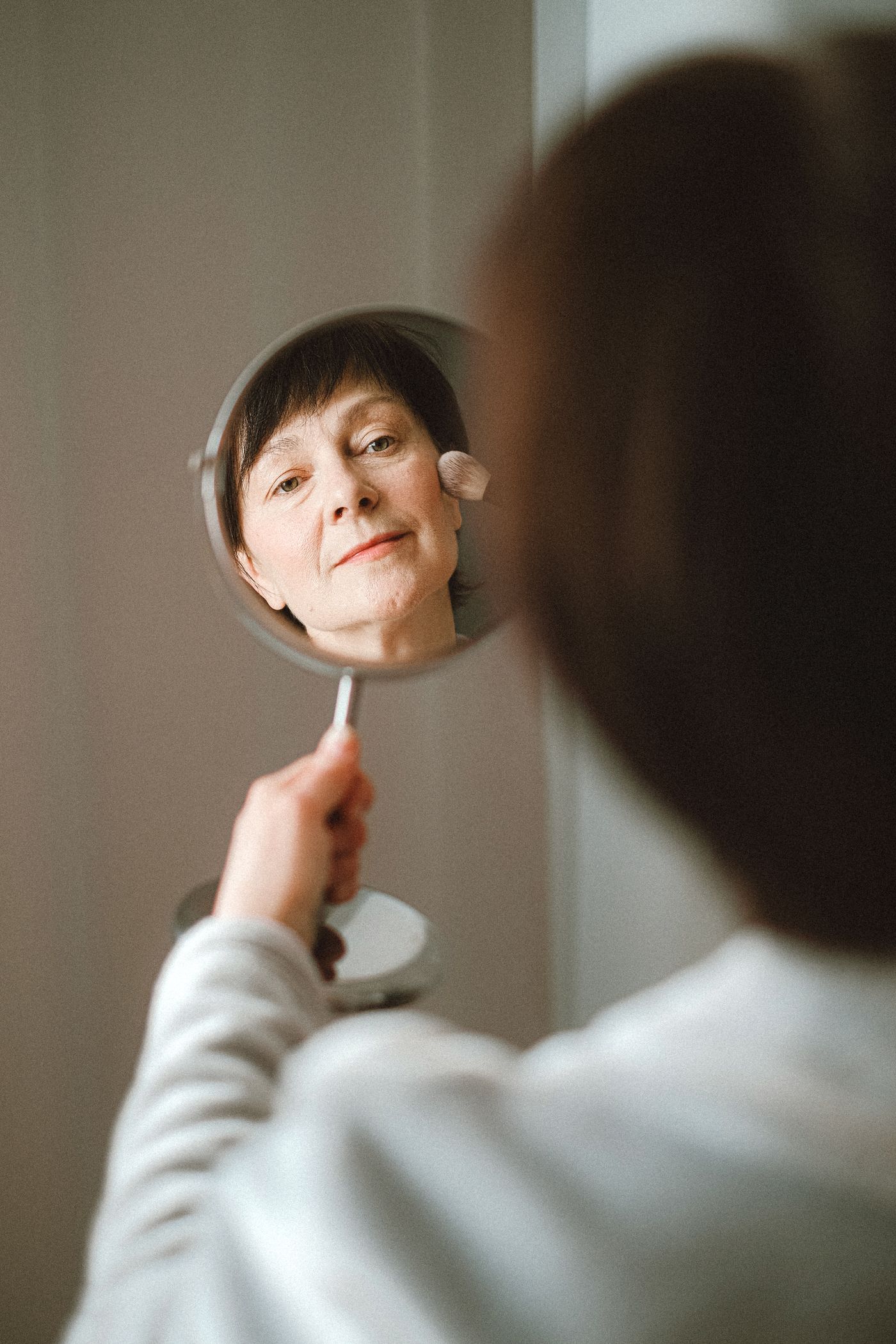
Ask the clinician to identify the main contributor to the jowl or neck concern. Is the expected improvement a subtle tightening effect or a more substantial contour change? Which feature is likely to remain? An answer that distinguishes these points is more useful than a promise that the whole lower face will be lifted.
Discuss previous fillers, threads, devices and surgery. Those procedures can affect the current examination and future treatment choices. Bring records when available, especially if there is persistent swelling, tenderness, firmness or asymmetry. A new treatment should not be used to conceal an unexplained change from an earlier intervention without assessment.
The existing HIFU lower-face, jawline and neck guide describes treatment areas more broadly. The focus here is the more specific situation in which the degree of heaviness or loose skin may exceed what a device-based approach can reasonably change.
A Useful Comparison of Pathways
| Pathway | Reason it may be discussed | Important consideration |
|---|---|---|
| Selected ultrasound treatment | A modest tightening goal in suitable tissue | Not equivalent to removing substantial excess skin |
| Another non-surgical intervention | A separate contributor identified on examination | Must target the actual problem, not simply add procedures |
| Surgical assessment | More substantial descent or skin excess and a larger correction goal | Requires a full discussion of surgical suitability and recovery |
| Observation | Benefit is uncertain, concerns are mild, or treatment is not desired | A legitimate elective-care choice |
Combination Treatment Needs Independent Reasons
A patient may have more than one concern, but that does not automatically justify a multi-procedure package. Each additional intervention should have an identified role and a reasonable expected benefit. A combination cannot be assumed to reproduce surgery simply because it contains several non-surgical treatments.
Staging can help determine whether the first intervention provides enough improvement. It also leaves room to change direction if recovery or response differs from expectations. Before paying for a long course, ask whether unused treatments can be reconsidered when the clinical plan changes. Financial commitments should not pressure a patient into an unsuitable next stage.
If another procedure is being considered, our guide to sequencing Sculptra, HIFU and Botox outlines the questions to discuss before combining appointments.
Safety and Reasons to Delay
Medical history, medicines, previous treatment reactions, active infection and skin integrity should be reviewed. Device-specific contraindications need checking. Report altered sensation, weakness, implanted devices or earlier facial procedures rather than deciding yourself that they are irrelevant. Pregnancy or breastfeeding may also change an elective treatment recommendation.
Possible adverse effects depend on the procedure but can include discomfort, swelling, bruising, altered sensation and tissue injury. Burns, persistent weakness or an unwanted contour change deserve medical attention. A short usual recovery period should not be used to imply that a non-surgical treatment cannot produce a serious complication.

Recovery and Follow-up
Follow instructions for the exact treatment performed. Clarify when usual skin care, exercise and other activities can resume. Avoid adding home devices or vigorous massage to try to increase a tightening effect. If another procedure was performed recently, ask the clinician to reconcile any differing aftercare instructions.
Arrange a review that allows the intended response to be assessed. Early swelling can temporarily change a contour, while gradual effects require a different timeline. Use comparable photographs and the initial goal. The clinician should explain whether the observed change is meaningful and whether further treatment is justified.
For follow-up planning, our guide to the HIFU results timeline explains how change is assessed over time.
Planning Around Cost, Work and Events
The full cost of repeated non-surgical sessions matters when the expected benefit is limited. Compare a realistic course and likely maintenance with alternatives, without assuming that surgery is preferable solely because it may produce more change. Each pathway has different risks, recovery requirements and personal implications.
In Kuala Lumpur, think about commuting, sun exposure, sweating and access to review. Avoid scheduling a first treatment immediately before a major event on the assumption of no downtime. If a modest result would not feel worthwhile to you, say so before the procedure rather than hoping that a stronger-than-usual response will occur.
Normal Ageing and Personal Choice
Jowls and neck changes are common features of ageing, not failures of self-care. A patient does not need to undergo treatment to justify feeling confident. Medical advice should offer options and limits without using fear or shame to create demand for repeated procedures.
It is reasonable to take time, seek another opinion or choose no treatment. If the concern is causing substantial distress, discuss that openly. A supportive consultation should help establish a healthy, achievable goal rather than encourage an endless search for a perfectly sharp jawline in every photograph.
FAQs
Can HIFU remove heavy jowls completely?
Complete removal should not be promised. The response depends on the contributors and degree of change. Substantial excess skin or tissue descent may exceed what a non-surgical tightening treatment can achieve.
Is stronger treatment always better for a heavier face?
No. Greater intensity can increase risk without correcting a poor match between the procedure and anatomy. The doctor should explain why the selected treatment is appropriate rather than simply increasing a treatment count.
Does loose neck skin mean I need surgery?
Not automatically. A surgical opinion may help explain options, but treatment is elective and suitability requires assessment. Some patients prefer a smaller non-surgical change or observation after understanding the limitations.
Can fillers replace a neck lift?
Fillers do not remove excess neck skin. They may be considered for other suitable concerns, but should not be presented as an interchangeable substitute for surgical tissue correction.
What if the problem is mainly fat under the chin?
That needs its own examination. Fullness, laxity and muscle-related features can coexist. A treatment should follow the identified contributor rather than assuming that every double-chin concern has the same cause.
Can a combination package guarantee a facelift-like result?
No. Several non-surgical procedures do not automatically add up to the result of surgery. Each intervention needs a separate justification, and the overall expected change should remain realistic.
Should I repeat HIFU if the first result was minimal?
Review the initial target and the reason for the limited response before booking another session. A different approach or stopping may be more appropriate than automatically repeating treatment.
Is it acceptable to decide against any procedure?
Yes. The purpose of consultation is informed choice. Normal ageing does not create an obligation to undergo cosmetic treatment, and declining a procedure is a valid decision.
Conclusion
HIFU for heavy jowls or excess neck skin has limits that should be discussed before treatment. Appropriate selection depends on tissue characteristics, the main contributor and the degree of improvement the patient wants. Increasing intensity cannot reliably overcome a mismatch between anatomy and a procedure’s capabilities.
Millennium Clinic Kuala Lumpur provides doctor-led HIFU consultation and personalised treatment planning. An assessment can clarify whether a modest tightening approach, another option, referral or observation best fits your findings and goals, without promising a surgical-type transformation.
References
Medical disclaimer
This article is for general education and does not replace a consultation, diagnosis or treatment plan from a qualified medical practitioner. Suitability, risks, recovery and outcomes vary between individuals. Do not start, stop or change medicines or treatment based on this article alone. Seek prompt medical attention for concerning symptoms and do not delay care because of information you read online.
Recent articles by Dr Diana Salim
Explore more patient-friendly guides from Millennium Clinic Kuala Lumpur.
-
Why Acne Scars Look Worse in Certain Lighting: How to Track Real Treatment Progress
Learn why lighting changes the appearance of acne scars and how consistent photographs and clinical reviews help assess…
-

Lumps After Sculptra: Early Swelling, Nodules and When to Seek Medical Review
Understand why lumps after Sculptra need assessment, how early swelling differs from delayed nodules, and which symptoms need…
-
HIFU After Previous Fillers or Threads: What Your Doctor Needs to Know
Learn what to disclose before HIFU after fillers or threads, why timing and placement matter, and why a…
-
Acne Scar Treatment for Darker Skin: Reducing the Risk of Post-Inflammatory Pigmentation
Understand pigmentation risk during acne-scar treatment, why skin history matters, and practical precautions for Malaysian skin tones.
-

Sculptra After Significant Weight Loss: Why Weight Stability and Facial Assessment Matter
Explore how weight stability, facial volume and skin laxity affect Sculptra planning after weight loss, and when medical…
-

HIFU or Botox for Facial Lines? Why Skin Laxity and Muscle Movement Need Different Treatments
Compare HIFU and Botox by the cause of facial lines, including skin laxity, expression and texture, with realistic…
-
Acne Scar Treatment While You Still Have Breakouts: What Should Be Treated First?
Learn why ongoing acne can change scar-treatment timing, how doctors set priorities, and when scar procedures may be…
-

Why Do New Skin Tags Keep Appearing? Recurrence, Friction and Health Assessment
Understand new versus recurrent skin tags, friction and metabolic associations, and when a personalised medical assessment may be…
Visit Millennium Clinic Kuala Lumpur
KL Eco City Mall, Bangsar
Lot L3-22A, KL Eco City Mall,
59200 Bangsar, Kuala Lumpur.
Phone: 019-3100836
Email: hello@millenniumclinickl.com