


Dr Diana Salim
Aesthetic doctor at Millennium Clinic Kuala Lumpur. Learn about her background and approach to individual assessment on her doctor profile.
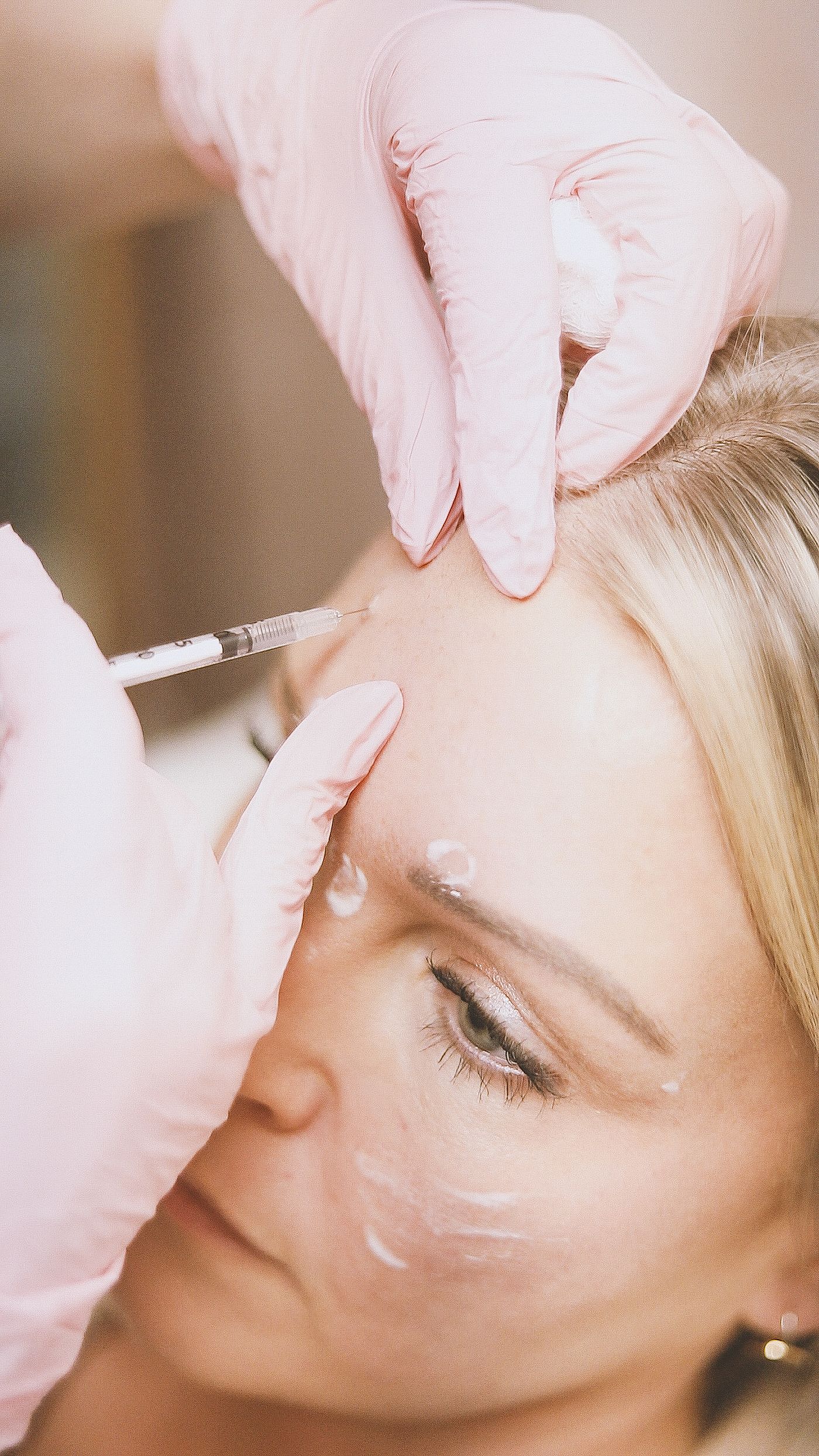
TABLE OF CONTENTS
- Introduction
- Key Takeaways
- Start with How the Line Behaves
- Why Facial Lines Have Different Contributors
- What Sculptra Is Designed to Contribute
- How Strong Is the Evidence?
- When Movement Is the Dominant Issue
- When Reduced Support Contributes
- When Surface Changes Need Their Own Plan
- Compare the Targets, Not Only the Brands
- Suitability and Reasons to Decline
- Understand the Commitment Before Proceeding
- Planning the Course and Review
- Safety and Warning Signs
- Recovery and Skin Care
- Potential Benefits and Realistic Limits
- Making a Decision Without Package Pressure
- FAQs
- Conclusion
- References
Introduction
A facial line does not identify its own cause, and Sculptra is not a universal treatment for every crease. At Millennium Clinic Kuala Lumpur, an assessment should consider whether a line mainly reflects reduced support, repeated expression, surface damage or a mixture of these changes. The product should follow that assessment rather than determine it.
Patients considering Sculptra for facial lines often want a softer appearance without changing their identity. A useful consultation explains which feature may be suitable, which is unlikely to respond and what alternatives deserve consideration. This article focuses on matching a line-related concern to the right treatment target, with realistic evidence and safety limits for Malaysian readers.
Key Takeaways
| Key Point | Summary |
|---|---|
| Different causes | Lines can involve volume, movement, skin changes or several contributors. |
| Sculptra | A PLLA injectable with specific facial indications and a gradual intended tissue response. |
| Expression-related lines | A muscle-focused assessment may be more relevant than adding a biostimulator. |
| Surface damage | Texture and sun-related changes may need a separate skin-care or procedural plan. |
| Evidence boundaries | Research or approval for one area cannot be applied automatically to every facial zone. |
| Realistic choice | Select a suitable goal, consider alternatives and understand the limits of reversal. |
Start with How the Line Behaves
A line that becomes obvious during a frown differs from a crease that remains while the face is relaxed. A fold may also become more prominent because nearby tissue has changed position or support. Observing the face at rest and during normal expressions helps the clinician understand the main contributor instead of treating every visible line as a missing-volume problem.
Describe when the feature bothers you: in ordinary conversation, in photographs, at rest or only under certain lighting. A mirror demonstration can help, but do not assume that manually pulling the skin shows exactly what an injectable will achieve. Moving tissue with a hand changes several structures at once and is not a reliable simulation of a particular procedure.
Bring a small number of representative photographs if the concern varies. Avoid relying only on heavily edited images or a camera angle chosen to emphasise the worst view. A useful treatment goal relates to the appearance you experience in daily life rather than a promise of smooth skin under every expression and light source.
Why Facial Lines Have Different Contributors
Ageing affects skin and underlying tissues, while sun exposure and repeated expression contribute in different ways. Mayo Clinic describes age, ultraviolet exposure and facial movement among contributors to wrinkles. These factors can overlap, so a single visible crease may not have one simple explanation.
Dryness or irritation can make fine surface lines more noticeable. Reduced support can alter a fold. Muscle activity can repeatedly crease the same area. A diagnosis-led approach separates these contributors and identifies which one the patient wants to address first. Treating an incidental finding will not necessarily solve the feature that originally prompted the appointment.
This is also why a friend’s successful procedure may not be the right model. Two people can point to the same facial region while having different anatomy and treatment needs. The clinician should explain the finding in your face rather than relying on a standard age-based or region-based package.
What Sculptra Is Designed to Contribute
Sculptra contains PLLA in an injectable preparation and is associated with a gradual tissue response. It differs from a muscle-relaxing treatment and from simply applying an HA moisturiser to the skin. The presence of a line does not by itself establish that introducing a particulate material is appropriate or that the result will be easily reversible.
The FDA describes a specific Sculptra indication for cheek fine lines and wrinkles in an indicated population. This is not a universal endorsement for every facial site. Local product status and the exact proposed use in Malaysia should be explained separately.
Do not infer suitability for the lips, eye area or forehead from a broad label such as facial rejuvenation. Anatomy and authorised indications matter. Educational stock photographs of cosmetic injections do not identify the product or establish an appropriate injection site; the clinician must explain the actual treatment plan.
To distinguish short-term appearance from longer-term change, see our guide to Sculptra swelling and gradual-result timelines.
How Strong Is the Evidence?
A systematic review of PLLA facial aesthetics found limitations in the quality of the evidence. Reported improvements do not establish a guaranteed result for every line, treatment area or patient. A biological explanation about collagen should be distinguished from evidence for the exact outcome being proposed.
Ask whether the research involves the same formulation, indication and population. A study addressing cheek wrinkles cannot prove that a different anatomical concern will respond in the same way. Likewise, a photograph of immediate fullness cannot establish a later tissue response. The fair review point depends on the intervention rather than the excitement of the procedure-day image.
This does not mean that a treatment with imperfect evidence can never be considered. It means that the uncertainty should be part of consent. The patient should understand why the clinician recommends the approach, what alternatives exist and how the result will be evaluated before deciding whether another session is useful.
For background on the intended tissue response, read our explanation of how Sculptra stimulates collagen.
When Movement Is the Dominant Issue
If a line is strongly linked to muscle activity, the clinician may discuss a neuromodulator or another appropriate approach rather than assuming Sculptra is needed. The AAD explains that botulinum toxin temporarily reduces activity in selected muscles. This mechanism differs from a PLLA injectable.
A muscle-focused treatment still requires careful anatomical assessment. Unwanted weakness or altered expression can occur, and not every muscle-related line should be treated. The goal should include preserving normal facial function and the expressions the patient values. A clinician should explain what softening is realistic and which resting lines may remain.
Sculptra should not be presented as an alternative version of Botox simply because both may be discussed for facial ageing. They have different targets, timelines and management considerations. A comparison should begin with the cause of the concern rather than a preference for one brand category.
When Reduced Support Contributes
A fold can become more noticeable as the surrounding tissues change. In a suitable patient, a clinician may discuss an intervention directed at support rather than repeatedly treating the line itself. This requires examination of proportions, tissue quality and existing fullness. Adding material indiscriminately can create heaviness without resolving the original concern.
Discuss the degree of change you would find worthwhile. Subtle support and a completely different contour are not the same goal. The plan should state where treatment is intended to help and where it is deliberately not being used. More facial volume is not automatically a more natural or balanced result.
The clinic’s existing Sculptra guide to volume loss by facial area provides broader anatomical context. For a line-related complaint, the additional task is deciding whether support loss is the main contributor or only one part of a more complex feature.
When Surface Changes Need Their Own Plan
Fine crepiness, uneven texture and pigment are not identical to a support deficit. A clinician may recommend an appropriate skin-care review or another procedure, depending on the diagnosis. An injectable should not be sold as a way to remove all sun damage or replace routine protection from further ultraviolet exposure.
If the skin is inflamed or irritated, addressing that problem may be more appropriate than proceeding immediately with elective injections. Tell the clinician about burning, peeling and recent changes in products. A surface that looks temporarily smoother after a moisturiser is also not evidence that a deep structural intervention is necessary.
If another procedure is being considered, our guide to sequencing Sculptra, HIFU and Botox outlines the questions to discuss before combining appointments.
Compare the Targets, Not Only the Brands
| Main contributor | Question for assessment | Limit of a generic injectable plan |
|---|---|---|
| Muscle movement | Does the line change substantially with expression? | Adding a biostimulator does not reproduce targeted muscle relaxation. |
| Reduced support | Would a suitable structural change improve the fold? | Correction should preserve proportion rather than add fullness everywhere. |
| Skin surface changes | Is irritation, dryness or sun-related damage prominent? | An injectable does not treat every skin condition. |
| Substantial laxity | Is tissue descent more important than the line itself? | Non-surgical care may not meet a large lifting goal. |
These categories are not instructions for self-diagnosis. The same face may contain several contributors, and the doctor may recommend treating one first. A staged plan can make it easier to see which remaining concern still matters after the initial result.
Suitability and Reasons to Decline
Suitability depends on the exact indication, medical history, skin findings and expectations. A patient should disclose previous filler, biostimulator or thread treatment, even when performed elsewhere. Dates, product names and areas are helpful. A history described only as having had anti-ageing injections may not provide enough information for safe planning.
Important issues include active infection, inflamed lesions, allergies, relevant medicines and a tendency to develop raised scars. Pregnancy, breastfeeding and immune-related conditions require appropriate discussion. Do not stop prescribed treatment without medical advice. A clinician may recommend a delay, an alternative or no injection if the likely benefit does not justify the risk.
Understand the Commitment Before Proceeding
Sculptra is not reversed by hyaluronidase like an HA material may be. Its PLLA component and the intended tissue response create different correction considerations. If easy reversibility is important, raise that point before treatment. A gradual result is not the same as an instantly erasable trial.
Ask how the clinic handles an unwanted result or a delayed lump. The answer should involve assessment and a management pathway, not a promise that every problem can be dissolved immediately. A patient should be able to weigh the potential benefit against the possibility of a concern requiring more complex follow-up.
Planning the Course and Review
Agree on an initial target and a reasonable review point. The number of sessions or amount of product should not be determined solely by age or a promotion. A plan should be adjustable if the patient is satisfied earlier, if the response is limited or if an unexpected reaction occurs.
Avoid comparing the result only with an immediate after-photograph. Swelling can temporarily change lines and contour. Use similar lighting and expression for later comparisons, and assess the feature that was actually targeted. If the concern was dynamic, a relaxed-face image alone may not answer whether the goal was achieved.
Our overview of questions to consider before Sculptra treatment can help you prepare for the consultation.
Safety and Warning Signs
The FDA warns that facial injectables can cause serious harm if material enters a blood vessel. Severe pain, unusual pale or dusky skin, visual disturbance or neurological symptoms after injection require urgent assessment. They should not be treated as ordinary cosmetic disappointment.
Other possible problems include bruising, infection, persistent swelling and delayed lumps or inflammatory reactions. Report symptoms that are new, increasing or not following the expected recovery. Do not use a home device or aggressive massage to try to correct an unexplained change. Management depends on the cause and the material involved.

Recovery and Skin Care
Obtain instructions specific to the product and technique. Clarify any advice about massage, activity and resuming usual skin products. If you are having more than one procedure, ask the clinician to resolve conflicting aftercare instructions. A routine borrowed from another brand may not be appropriate.
In Kuala Lumpur, consider heat, sweating and outdoor travel when arranging recovery. Gentle skin care and appropriate sun protection support general skin health but do not guarantee an injectable response. Allow some flexibility around work and social events because individual swelling or bruising cannot be predicted perfectly.
Potential Benefits and Realistic Limits
For a suitable indication, the patient may value a gradual change that fits their own features. That potential should not be described as removal of every wrinkle or permanent prevention of ageing. Expression, sun exposure and the natural movement of facial tissues continue. A realistic result can still include visible lines.
Treatment may be less worthwhile when the main concern lies outside the method’s capabilities or when the patient expects a major lift. Discuss the ceiling before committing to a course. An honest explanation of limits can prevent repeated treatment directed at a problem that requires a different approach.
Making a Decision Without Package Pressure
Compare the expected benefit, risks, reversibility, total cost and access to follow-up. A treatment that appears more convenient or long-lasting is not automatically the better choice. It is reasonable to prioritise one concern and revisit others later rather than combining several procedures during the first appointment.
Take time if the explanation does not match your goal. Ask what would happen if you chose no treatment or a simpler option. Normal facial lines do not create an obligation to undergo an intervention. The consultation should support informed choice rather than make the patient feel that every feature needs correction.
FAQs
Can Sculptra treat every facial line?
No. The cause, location and product indication matter. Lines from movement, surface changes and reduced support may require different approaches. A clinician should explain which part of your concern is a suitable target.
Is Sculptra the same as Botox?
No. They have different mechanisms and treatment goals. A muscle-related line needs a muscle-focused assessment, while a biostimulatory injectable has a different role and commitment.
Does the cheek-wrinkle indication cover the whole face?
No. An indication for a particular area and population should not be extended automatically to every site. Ask about the exact proposed use and the relevant Malaysian product information.
Will I look smoother immediately?
Early appearance can be affected by swelling and injected fluid. It is not reliable evidence of the eventual tissue response. Agree on an appropriate review point for the planned treatment.
Can it remove sun damage?
It is not a universal treatment for sun-related skin changes. Pigment, surface texture and other concerns may need a separate diagnosis and plan. Routine skin protection remains relevant regardless of cosmetic treatment.
What if I want a result that is easy to reverse?
Discuss that priority before choosing Sculptra. Hyaluronidase does not dissolve its PLLA component. An alternative material or no procedure may better fit a patient who places high value on straightforward reversibility.
Is combining treatments always more effective?
No. A combination should address separate confirmed concerns. It can also increase cost, recovery and the number of potential complications. Each additional procedure needs its own reason.
Can I preserve my natural expressions?
Tell the clinician which expressions and features you want to preserve. The plan should consider facial function and balance. No treatment label alone guarantees a natural-looking result.
Conclusion
Sculptra for facial lines should be considered only after identifying the contributors and the exact treatment goal. Volume change, expression and surface damage are not interchangeable problems. Evidence and product indications should guide a measured discussion, with limitations and correction options understood before injection.
Millennium Clinic Kuala Lumpur offers doctor-led consultation and personalised Sculptra treatment planning. A careful assessment can help determine whether a suitable injectable, another approach or observation best matches the lines that concern you and the appearance you want to preserve.
References
Medical disclaimer
This article is for general education and does not replace a consultation, diagnosis or treatment plan from a qualified medical practitioner. Suitability, risks, recovery and outcomes vary between individuals. Do not start, stop or change medicines or treatment based on this article alone. Seek prompt medical attention for concerning symptoms and do not delay care because of information you read online.
Recent articles by Dr Diana Salim
Explore more patient-friendly guides from Millennium Clinic Kuala Lumpur.
-

Why HIFU May Not Be Enough for Heavy Jowls or Excess Neck Skin
Understand why heavy jowls and excess neck skin may exceed HIFU’s capabilities, and how anatomy guides alternatives and…
-
Why Acne Scars Look Worse in Certain Lighting: How to Track Real Treatment Progress
Learn why lighting changes the appearance of acne scars and how consistent photographs and clinical reviews help assess…
-

Lumps After Sculptra: Early Swelling, Nodules and When to Seek Medical Review
Understand why lumps after Sculptra need assessment, how early swelling differs from delayed nodules, and which symptoms need…
-

HIFU After Previous Fillers or Threads: What Your Doctor Needs to Know
Learn what to disclose before HIFU after fillers or threads, why timing and placement matter, and why a…
-
Acne Scar Treatment for Darker Skin: Reducing the Risk of Post-Inflammatory Pigmentation
Understand pigmentation risk during acne-scar treatment, why skin history matters, and practical precautions for Malaysian skin tones.
-

Sculptra After Significant Weight Loss: Why Weight Stability and Facial Assessment Matter
Explore how weight stability, facial volume and skin laxity affect Sculptra planning after weight loss, and when medical…
-

HIFU or Botox for Facial Lines? Why Skin Laxity and Muscle Movement Need Different Treatments
Compare HIFU and Botox by the cause of facial lines, including skin laxity, expression and texture, with realistic…
-

Acne Scar Treatment While You Still Have Breakouts: What Should Be Treated First?
Learn why ongoing acne can change scar-treatment timing, how doctors set priorities, and when scar procedures may be…
Visit Millennium Clinic Kuala Lumpur
KL Eco City Mall, Bangsar
Lot L3-22A, KL Eco City Mall,
59200 Bangsar, Kuala Lumpur.
Phone: 019-3100836
Email: hello@millenniumclinickl.com